Why Digital Transformation Projects in Saudi Arabia Stall in Year Two
The first year buys software. The second year is when you find out whether anyone changed how they work. Here is where these programmes actually break, and what separates the ones that survive.
Business Transformation3 min read
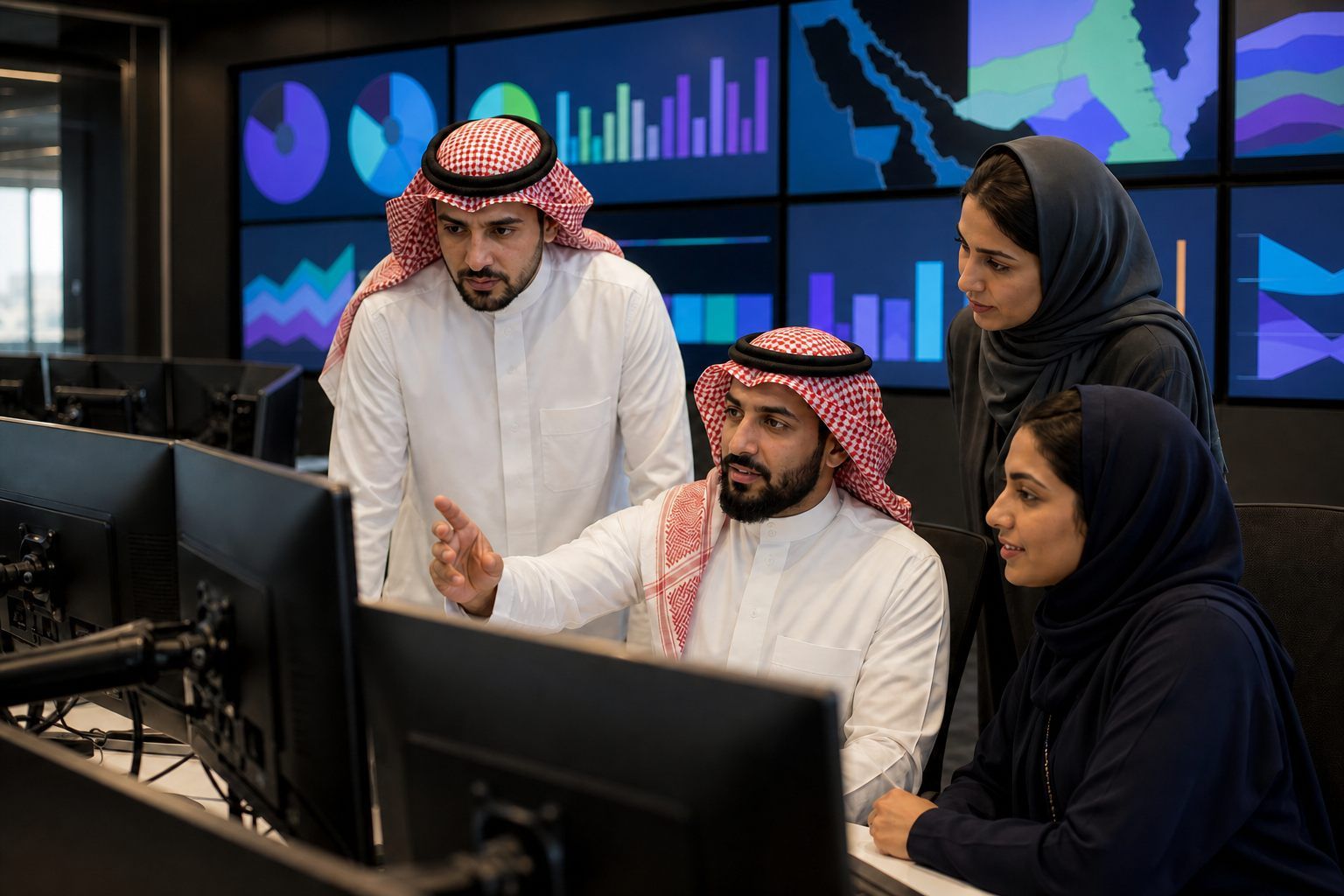
Year one of a transformation programme is easy to feel good about. Budget is approved, a system is chosen, dashboards appear. Year two is when someone asks what actually changed, and the honest answer is often: the software, and nothing else.
The pattern is predictable
Four failures account for most stalled programmes, and none of them are technical.
The old process survived inside the new system. A department that needed three approvals on paper now needs three approvals on screen. Nothing got faster; the friction just moved. If nobody was willing to challenge the process, the software was never going to fix it.
The data was never reconciled. Two departments each kept a customer list. The new platform now holds both, disagreeing with itself in one place instead of two. Every report becomes an argument about whose number is right.
Adoption was measured by logins. People log in because they are told to. Whether they work there is a different question, and it is answered by looking at where decisions get made — the spreadsheet exported every Sunday is the real system of record.
The champion left. Programmes that depend on one senior sponsor lose momentum the moment that person changes role. Ownership has to be structural, not personal.
What year two should have been
The programmes that survive treat the first year as a narrow, deep proof rather than a broad, shallow rollout. One department, one process, end to end, genuinely better. That gives you something rare and valuable: internal evidence, in your own context, that the change works.
Broad rollouts produce the opposite. Twelve departments each get a partial implementation, none of them complete enough to be clearly better than what they replaced, and the programme runs out of goodwill before it runs out of budget.
Sequencing that holds up
- Pick a process with a number attached. Quote turnaround, days to invoice, time to onboard a client. If you cannot measure it now, you will not be able to prove improvement later.
- Fix the process on paper first. Remove steps before automating them. Automating a bad process makes it permanent.
- Migrate the live data only. Historical archives can wait. A clean working set beats a complete messy one.
- Instrument the outcome, not the usage. Track the number from step one, weekly, in front of the people who own it.
- Hand over ownership deliberately. The team running the process should be able to change forms, stages and reports without raising a ticket.
The Saudi context adds urgency
Regulatory deadlines are doing part of the sequencing for you. E-invoicing obligations now reach businesses at progressively lower turnover thresholds, which means finance and billing systems are being modernised whether or not a transformation programme exists. That is leverage — the work is happening anyway, so connect it to the rest of the business rather than treating it as an isolated compliance project.
The wider environment helps too. Digital payment adoption among Saudi SMEs is close to universal, and customer expectations have moved accordingly. The gap is rarely appetite. It is that the operating model underneath has not caught up with the front end.
The question to ask at the next steering meeting
Not how much of the system have we rolled out, but: which decision is now made differently, and who can prove it?
If nobody can answer that, you do not have a transformation programme. You have a software deployment with a larger budget line.
Planning a transformation programme and want the sequencing pressure-tested before you commit? Start a project.